

Theatre is a magical realm where stories come alive, and the stage becomes a canvas for creativity. While the spotlight often shines on the actors delivering captivating performances, there exists a bustling world behind the curtain that plays a pivotal role in creating the enchantment we witness. Join us as we pull back the curtain and take a detailed glimpse into the fascinating world of theatre production.
The Heartbeat of Theatre Production
Theatre production is a collaborative symphony, harmonizing the efforts of numerous talented individuals who work diligently to bring a production to life. From the initial spark of an idea to the final bow on opening night, every step is a carefully choreographed dance of creativity, logistics, and dedication.
The Playwright’s Pen: Crafting the Foundation
It all begins with the playwright, the wordsmith who weaves tales with the stroke of a pen. The script is the foundation of any theatrical production, outlining the dialogue, characters, and the essence of the story. It serves as the roadmap that guides the entire creative process.
Casting: Bringing Characters to Life
Once the script is in hand, the casting process commences. Directors carefully select actors who not only embody the characters but also bring a unique energy to the production. The chemistry between cast members is crucial, as it forms the backbone of the onstage dynamics.
Rehearsals: The Crucible of Creativity
Rehearsals are the crucible where creativity is molded into performance. Actors, under the guidance of the director, delve into their characters, rehearsing scenes, perfecting movements, and fine-tuning their delivery. It’s a collaborative effort where every member of the cast and crew contributes to the overall vision.
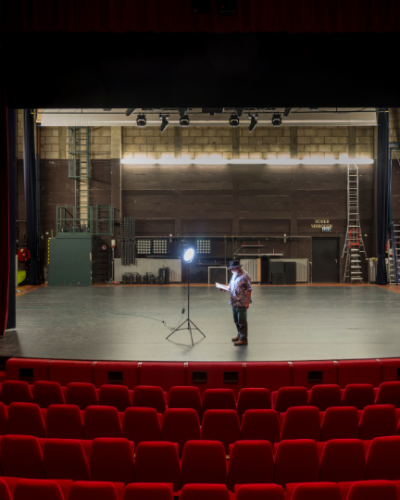
Set Design and Construction: Building the World
While actors breathe life into characters, the stage itself becomes a character through set design. Set designers, often working closely with the director, sketch, and create blueprints for the sets. Skilled craftsmen then bring these visions to life, constructing the physical environment where the story unfolds.
Costume Design: Bringing Characters to Visual Life
Costumes are more than just attire; they are an extension of the characters’ identities. Costume designers work meticulously to create outfits that reflect the era, personality, and emotions of each character. The costumes become a visual language, adding depth and authenticity to the storytelling.
Lighting and Sound: Setting the Atmosphere:
Lighting and sound are unsung heroes in theatre production, setting the mood and enhancing the overall experience. Lighting designers use various techniques to create atmospheres, highlight focal points, and guide the audience’s attention. Similarly, sound designers curate soundscapes that amplify emotions and immerse the audience in the world of the play.
Stage Management: The Backbone of Order
Behind the scenes, stage managers are the conductors ensuring order and precision. They coordinate actors, cue lighting and sound changes, and manage the overall flow of the production. Their meticulous work ensures that the performance runs seamlessly, and any hiccups are swiftly addressed.
Tech Rehearsals: Fine-Tuning Every Detail
Tech rehearsals mark the culmination of various elements coming together. Actors, costumes, sets, lighting, and sound converge on the stage for the first time. It’s a crucial phase where every detail is fine-tuned, transitions are perfected, and the production begins to take its final shape.
Dress Rehearsals: The Final Countdown
Dress rehearsals are the final countdown to the main event. Actors don their costumes, the lighting and sound are synchronized, and the set becomes a fully realized backdrop. It’s the last opportunity to address any remaining issues before the curtain rises on opening night.

Opening Night: The Culmination of Efforts
Opening night is a culmination of weeks or months of hard work and dedication. The cast and crew, fueled by a mix of excitement and nervous anticipation, take their places. The curtain rises, and the magic unfolds before a live audience, creating a unique, ephemeral experience that can never be replicated.
Beyond Opening Night: The Impact of Theatre Production
While opening night is a significant milestone, theatre production’s impact extends far beyond that moment. Each performance, whether witnessed by a handful or a full house, leaves an impression on the audience. It fosters a shared experience, sparking conversations, emotions, and a sense of community.
The Collaborative Spirit: A Tapestry of Creativity
The world of theatre production thrives on collaboration. It’s a tapestry where diverse talents come together – actors, directors, designers, technicians, and more – each contributing their unique skills to create a unified vision. The collaborative spirit is at the heart of what makes theatre production a dynamic and ever-evolving art form.
Challenges in Theatre Production: A Balancing Act
While the final product is a seamless performance, the journey to that point is not without its challenges. Tight schedules, budget constraints, technical glitches – each production faces its share of obstacles. However, it is the resilience and passion of the team that turn challenges into opportunities for growth and innovation.
The Evolution of Theatre Production: Embracing Technology
In the modern era, technology has become an integral part of theatre production. Innovations in lighting, sound, and special effects provide new avenues for creative expression. From projection mapping to interactive elements, technology enhances the theatrical experience, pushing the boundaries of what is possible on stage.
Conclusion
As we pull back the curtain on the world of theatre production, we discover a realm of creativity, dedication, and collaboration. It’s a world where every individual, from the playwright to the stage manager, contributes to the alchemy that transforms words on a page into a living, breathing performance. The next time you find yourself captivated by a play, take a moment to appreciate the unseen heroes working tirelessly behind the curtain, weaving the magic that makes theatre an enduring and enchanting art form.


